The Five Emotional Stages of Discovering CORE
I was a well-respected tax CPA when this all started. Decades in the profession. Complex clients. High-trust work. The kind of practitioner others turned to when things got messy – or when it mattered most.
No gimmicks. No shortcuts. Just solid, thoughtful, fully accountable tax work. I was anchored in the conventional world, and I was good at it. Everyone around me thought so too. I wasn’t looking for a better accounting system. I already knew what “good” looked like.
In 1996, in the middle of tax season, I was doing year-end trust accounting for a handful of longstanding clients. The kind of work CPAs know well – pulling together brokerage statements, tracing distributions, reconciling activity across multiple accounts.
I built a spreadsheet to make the process easier. Just something to help me survive another March.
And then something strange happened. The spreadsheet didn’t just help. It worked. In a way that none of the tools I’d used before ever had. It showed motion. It preserved both sides of every transaction in a single record. It gave me visibility I had never seen – and I’d used every accounting system out there. It wasn’t just automation. It was structural. Foundational.
I didn’t know what I had found. And I didn’t tell anyone. Because the idea that I – a practicing, inside-the-box tax CPA – had stumbled onto a better foundation for accounting? That felt insane.
What followed wasn’t a pitch deck. It wasn’t a product launch. It was a slow, private reckoning – one that mirrored the five stages of grief.
Stage 1: Denial “There’s no way this works.”
I’d worked with every accounting platform on the market. I knew what they could do. I knew what they couldn’t. So, when this spreadsheet I had built started outperforming all of them – cleaner, faster, more accurate – I dismissed it. You’re tired. It’s tax season. You’re seeing things.
I assumed it was a fluke. I didn’t even tell my closest colleagues. I buried it. I kept going.
Stage 2: Anger “Why hasn’t someone already done this?”
Eventually, I tried to break it. To prove it wrong. I couldn’t. And that made me angry. Angry at the profession. Angry at the software vendors. Angry at the fact that I’d spent decades tolerating systems that never quite worked.
I shared it with a few trusted peers. The reaction? Defensive. Irritated. Sometimes outright hostile. “That’s not how accounting works.” “You think you’re smarter than the profession?”
The more it worked, the more uncomfortable people got. So, I stayed quiet. But I kept using it.
Stage 3: Bargaining “Just let me get through this.”
At the time, I was recovering from the near collapse of a company I had co-founded. A company I started as a way to fund this very idea. The market wasn’t ready for an accounting breakthrough, so I pivoted. Built something else. Raised money. Hired a team. And held it together longer than anyone expected.
The business eventually changed hands, and I stepped away. But I told myself: Maybe this detour will give me the tools I need. Maybe the experience – the leadership, the software exposure, the scar tissue – will help me build CORE someday. That was the deal I made with myself. A rationalization. A survival mechanism.
All the while, CORE stayed in the background. Quietly helping with client work. Making the impossible simple. I tried to convince myself: Just get through this. Let it go. Move on. No more wild ideas. But I didn’t let it go. I couldn’t. Because it kept working.
And part of me still thought someone else would figure it out first. To this day, I’m amazed they haven’t.
Stage 4: Depression “Maybe I’m just crazy.”
For over 15 years, I tried and failed to explain it. I pitched it to software firms. Demonstrated it to partners. Built incredible offers. No one bit. I walked into high-stakes meetings full of hope and left feeling like a lunatic.
So, I stopped talking about it. But I kept using it. Because for all my doubts, the system worked. It solved problems nothing else could. And I couldn’t let that go. Even when no one believed me. Especially then.
Stage 5: Acceptance “It works. That’s enough.”
In 2014, the business I had once founded – the one that nearly collapsed – was acquired. And to my surprise, I received a check. It wasn’t luck. It was the reward for having kept things together when everyone else had scattered. That moment gave me a choice. Play it safe. Or build CORE for real. I hired Jason.
He didn’t need the job. He was already writing sophisticated railroad safety software, working independently, respected by everyone around him. He didn’t suffer fools. And I knew – if CORE wasn’t real, he’d shut it down. But he didn’t. He built it. Sharpened it. And, like me, he fell in love with it.
And then others did too. Steven. Michal (Mrs. Pi). Clients who suddenly understood their finances. Bookkeepers who became controllers. Owners who became CEOs.
And here’s the interesting part: Now, when we show CORE to new prospects, they go through the same emotional stages I did. Denial. Anger. Bargaining. Depression. Acceptance. Especially the CPAs.
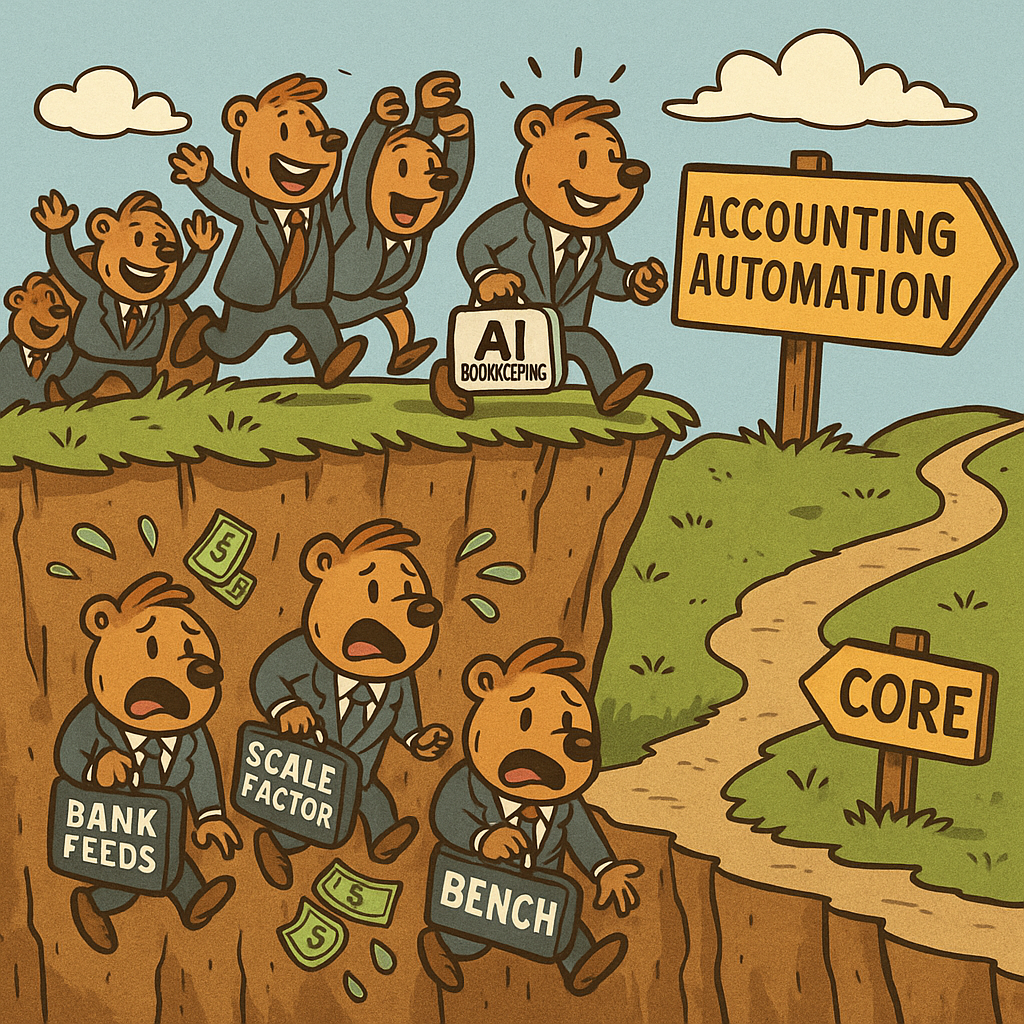
It sounds too good to be true – until it clicks. And when it clicks, something else happens: We quietly replace the CPA as the most trusted business advisor in their world. Because we don’t just report the numbers. We show them how it all moves.
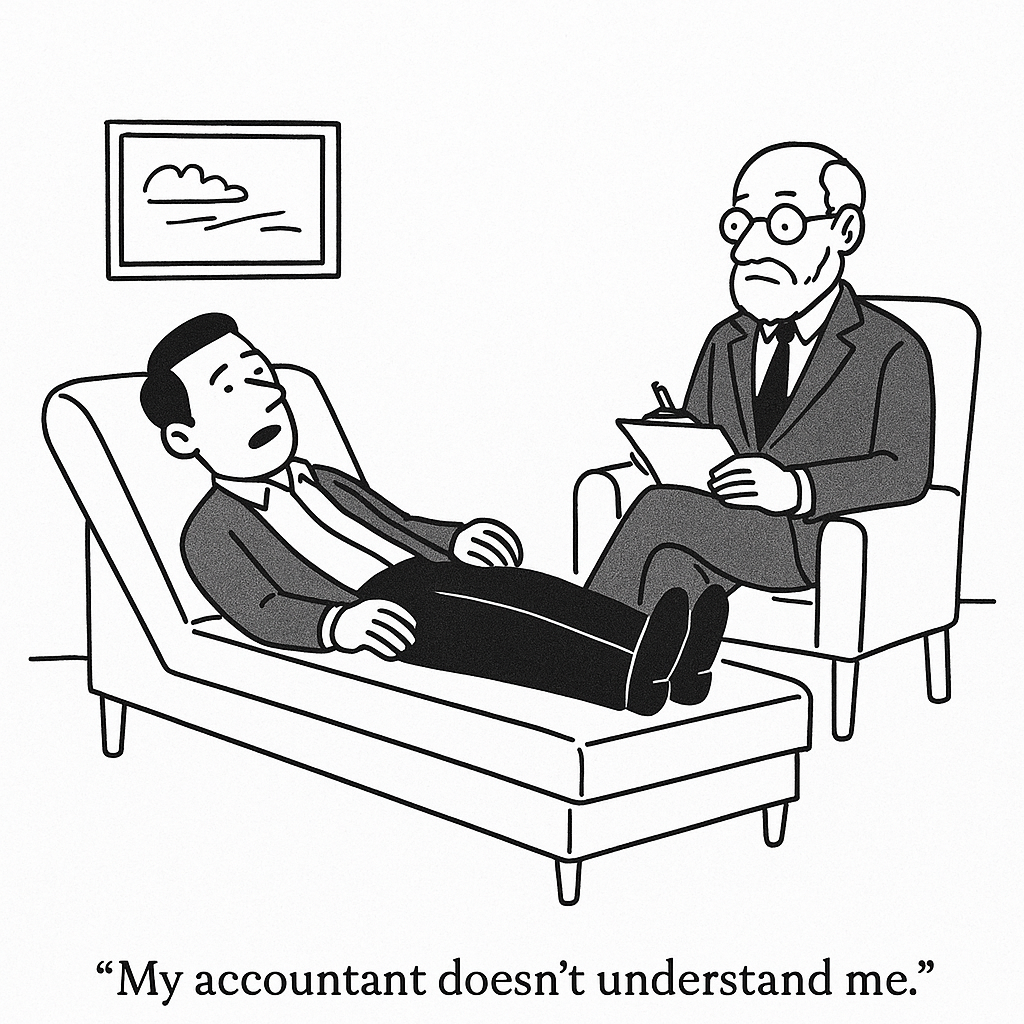
And when a client sees that? They don’t want to go back. They finally feel like someone understands them.
What I Know Now
CORE isn’t a product. It’s a better foundation. It’s built on algebra, not assumptions. On motion, not moments. On visibility, not just reporting. It doesn’t automate accounting. It fixes it.
If you’re skeptical, that’s fine. So was I. Just know this: every experienced accountant, CPA and CFO who’s taken the time to see it ends up at the same place. Not shocked. Not skeptical. Just nodding slowly and saying: “Yeah… this is better.”
We’re ready when you are.