What People Mean by Passive Budgeting
In practice, passive budgeting usually looks like:
- Automated transaction downloads
- Auto-categorization by apps
- Monthly or quarterly reviews
- Focus on trends instead of line-by-line scrutiny
- Minimal effort and minimal friction
The appeal is obvious. Life is busy. Most people don’t want to live inside spreadsheets or argue with themselves over coffee purchases. Passive budgeting promises awareness without pain. And yet, over time, the same frustrations surface. Expenses feel higher than expected. “Small” costs quietly compound. Things slip through the cracks.
Surprises appear long after the money is gone. Not because anyone did anything wrong. But because the system never saw everything.
The Real Failure: Incomplete Visibility
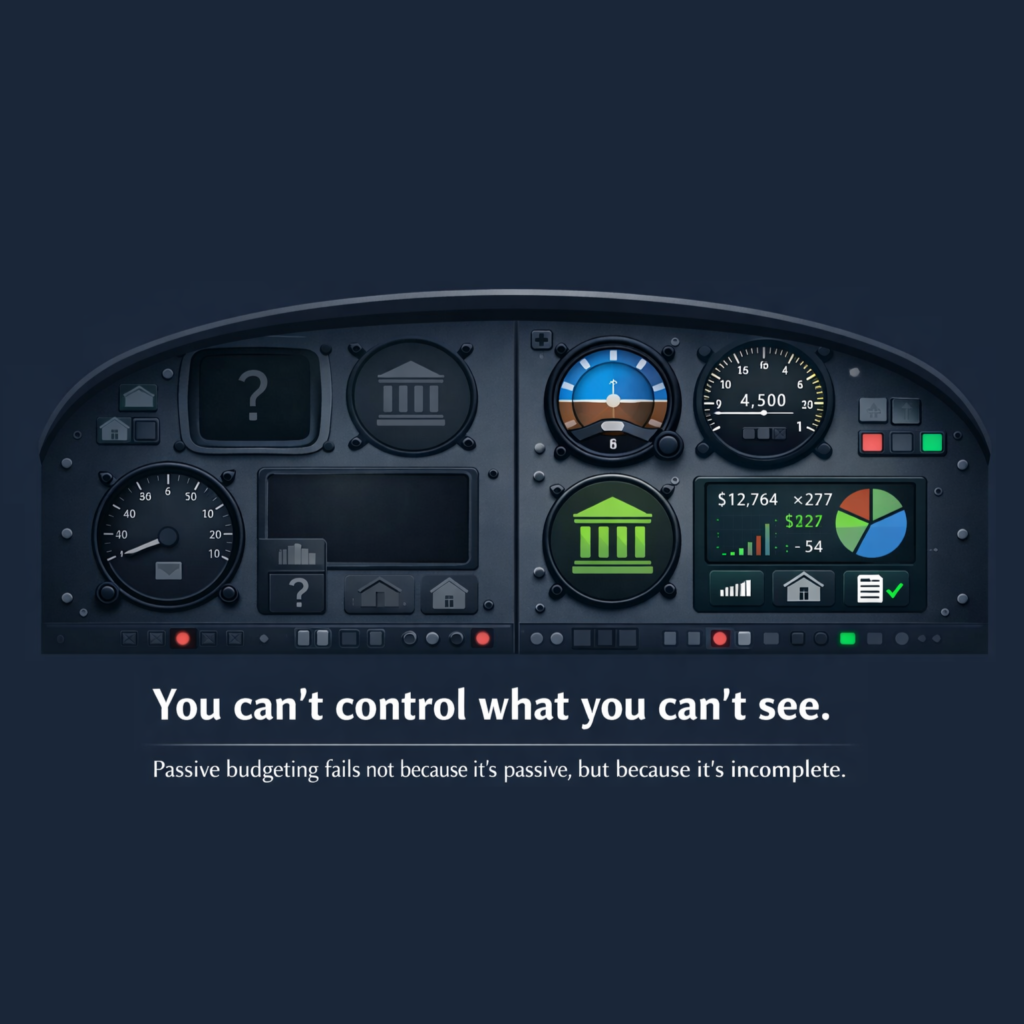
Most passive budgeting systems suffer from the same structural flaw: They don’t capture everything. Accounts are missing. Transfers are misunderstood. Institutional fees hide in plain sight. Reimbursements get buried. Context is lost.
The result is a system that looks calm on the surface but is quietly blind underneath. This is why people underestimate expenses by 20–50%. Not because they’re irresponsible. Because they’re measuring with half the instruments turned off. And if you can’t see it, you can’t control it.
A Different Approach: Complete Passive Budgeting
At Actuarius, we don’t reject passive budgeting. We finish it.
Passive budgeting only works when the system is complete. That means every account, every transaction, every institution, every classification. No exceptions. Once everything is captured and classified correctly, something interesting happens. You don’t have to micromanage. You don’t have to “budget harder”. You don’t have to change your behavior overnight.
The system starts working for you. Savings emerge naturally. Patterns become obvious. Questions answer themselves.
This is why one client described the approach as “overkill” and then immediately understood why it worked. Overkill isn’t excess. It’s what makes passivity safe.
Why This Creates Value Even Without Big Discoveries
Sometimes we uncover meaningful surprises – trustee fees that were higher than expected, reimbursements that never happened, advisory arrangements that weren’t delivering value
But here’s the quieter truth: Even when there are no dramatic discoveries, clarity alone creates savings. Simply seeing the full system changes decision-making. It reduces friction, encourages better questions, and prevents future leaks. When clients compare the savings created by visibility to the cost of the service, the math usually settles itself.
This isn’t about adding complexity. It’s about removing blindness.
Passive Budgeting as the First Step Toward Control
Passive budgeting isn’t the end state. It’s the on ramp. Once people finally trust what they’re seeing, many choose to engage more deeply:
- Refining categories
- Asking “why” instead of “where did it go?”
- Making intentional adjustments
The key difference is this: They’re no longer fighting the system.
Actuarius removes the pain first. Control follows naturally.
The Point
Passive budgeting doesn’t need more rules. It needs completeness. When everything is visible, budgeting doesn’t feel like discipline. It feels like understanding. And understanding is where real financial confidence begins.
Actuarius helps families and business owners build complete financial systems – so insight, savings, and control emerge naturally, without micromanagement.